Video Marketing for Charities: What Actually Works
Most charity videos don't fail because of bad production. They fail because the brief wasn't clear enough before anyone picked up a camera.
After five years working with charities including the Brighton & Hove Albion Foundation, here's what we've learned about what actually moves people, and what doesn't.
Start with the story, not the organisation
The most common mistake we see is charities leading with themselves. The logo, the mission statement, a description of their programmes. It's understandable, but it's the wrong order.
Nobody cares about your charity yet. What they care about is people. Open with a human being, a real story, a moment of genuine challenge or transformation, and you've got them. Then you can tell them who you are.
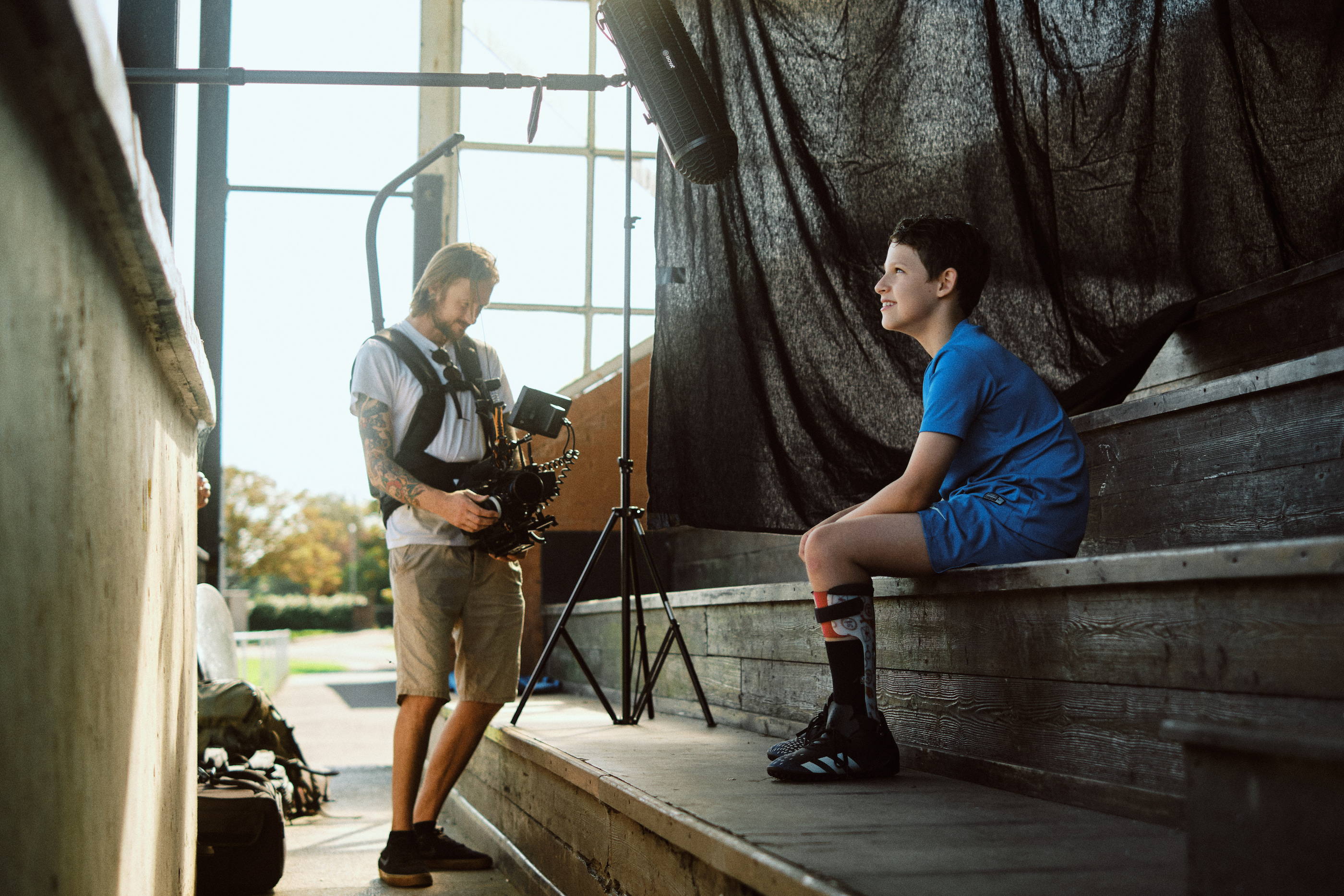
The first films we made for the Brighton & Hove Albion Foundation were built around three individual stories of people the charity had helped. Young people who'd overcome disability, bullying, social exclusion. No voiceover explaining what the Foundation does. Just people talking honestly about their lives and what changed. Those films became the Foundation's most powerful tool for grant applications and corporate partnerships, because funders could feel the impact before they'd read a single word of a proposal.
That's what a good impact story does. It gets someone to feel something before you've asked them for anything.
Know what you want the video to do
Charities often come to us wanting a video that does everything. Recruits volunteers, attracts donors, builds corporate partnerships, raises awareness. That's too much for one film to carry.
Before we turn on a single camera, we run a workshop with every client to get clear on one thing: what does this video need to achieve? The goal shapes everything, the stories you choose, the tone, the length, where it gets used and how it gets cut down afterwards.
A film designed to move donors at a fundraising event is a completely different thing to a film designed to sit on your website and explain your work to a potential corporate partner. Both are valid. But they're not the same film.
Different goals need different approaches
Working with the Brighton & Hove Albion Foundation over several years showed us how a charity's video needs evolve as they grow.
In the early years, emotive case studies were the priority. Real stories, real people, real impact. These work brilliantly on websites, in grant applications, and cut down into social ads. They keep people on your site, they make funders feel the weight of your work, and they give you content that keeps working long after the shoot day.
Then at a certain point they wanted something different. A showpiece film they could play at fundraising events and on stadium screens on charity days. Less about individual stories, more about the feeling of what the charity stands for. Pride, community, purpose. Less tears, more goosebumps. That kind of film does a completely different job, and it does it brilliantly in a room full of people who are already invested in the club and the cause.
The charities getting the best results from video aren't thinking about a single film. They're building a body of work over time, each piece doing a specific job, each one adding to the overall picture of who they are and why they matter.
Don't sanitise the emotion
This is something we see a lot. Charities worry about being manipulative or exploitative, so they pull back from the real emotional weight of their work. The result is a video that's tasteful, inoffensive, and completely forgettable.
There's a difference between exploiting someone's story and honouring it. When you give someone the space to speak honestly about what they've been through and what changed, that's not manipulation. That's just good filmmaking. The people we've filmed have almost always told us afterwards that they were glad they did it. Because their story matters, and it deserves to be told properly.
Don't go into too much detail about the mechanics of how you help people. Focus on the impact. Show what changes. Let the viewer feel that change rather than having it explained to them.
What to do if your budget is limited
Budget is a real constraint for most charities, and we'd rather have an honest conversation about it upfront than produce something that doesn't do the job.
When a charity comes to us with a tight budget, the first thing we do is the same thing we always do. We workshop the goals. What specifically are you trying to achieve? Once we know that, we can figure out the most efficient way to get there.
Sometimes that means a stripped-down crew and a single shoot day, focused entirely on finding and capturing one powerful story. The production is simpler, but if the story is right, it doesn't need to be complicated.
Sometimes it means starting with what we call a Visual Vault. A full day of cinematic b-roll, people, places, the work in action, building a library of high quality assets that the charity's internal team can then use with interviews they record themselves. We coach them through that process, and the result is a body of content that costs a fraction of a full production.
There's no single right answer. But there's always a way to do something meaningful if the goals are clear and the brief is honest.
The thing that separates the charities that get results
It's not budget. It's not production quality. It's clarity.
The charities that get the most from video know what they want the film to do, who it's for, and what success looks like. They trust the process enough to let real stories breathe. And they think about video not as a one-off project but as an ongoing part of how they communicate their impact.
If you're a charity thinking about video and you're not sure where to start, the best thing you can do is have a conversation before you think about production. We offer free discovery calls for exactly that reason. Not a pitch, just a chance to figure out what approach makes sense for where you are right now.